
What Is Drip Edge — And Why It’s One of the Most Important Parts of Your Roof
When most people think about a roof, they think about shingles.
But one of the most important components of your entire roofing system is something most homeowners have never even heard of:
Drip edge.
What Is Drip Edge?
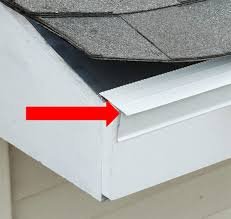
Drip edge on the eave of a roof
Drip edge is a metal flashing installed along the edges of your roof—both at the eaves (bottom edge) and rakes (sloped sides).
Its purpose is simple but critical:
to control the flow of water and direct it safely off your roof and into your gutters.
According to the International Residential Code (IRC R905.2.8.5), drip edge is required on asphalt shingle roofs and must be installed in a way that prevents water from getting underneath roofing materials.
It’s a small detail—but it plays a big role in protecting your home.
Why Drip Edge Is So Important
Water doesn’t always behave the way people expect.
Instead of falling straight off your roof, rainwater can cling to surfaces and travel backward due to surface tension. Without proper drip edge, water can actually run underneath your shingles and behind your gutters.
Organizations like the Asphalt Roofing Manufacturers Association emphasize that proper edge flashing is essential to protect roof decks and fascia from moisture intrusion.
Here’s what drip edge helps prevent:
• Rotting fascia boards
• Water intrusion into the roof deck
• Mold and mildew growth
• Damage behind gutters
• Premature roof failure
Over time, these issues can turn into expensive structural repairs—not just roofing problems.
What Happens When Drip Edge Is Missing or Installed Incorrectly
This is where problems start.
If drip edge is missing—or installed incorrectly—you may see:
• Water staining or rot behind gutters
• Peeling paint on fascia boards
• Soft or deteriorating roof decking at the edges
• Leaks that seem to “come out of nowhere”
The National Roofing Contractors Association notes that proper edge detailing is a key part of preventing water infiltration at one of the most vulnerable areas of the roof system—the perimeter.
In other words, the edges of your roof are where failures often begin.
A Real-World Example
In 2020, I had just started installing roofs. I couldn’t tell you what fascia or soffit was, much less drip edge. Funnily enough, I learned what both were from the same experience!
I was called out to someone’s home to address a leak. The homeowner pointed out to me that there were multiple areas along the perimeter where water was causing rot. This roof was installed before drip edge was code. I called in my supervisor to see what advice he had.
My supervisor explained to me the home did not have drip edge, and that’s why the home had multiple areas where soffit and fascia were rotten. So here's what we did:
During the process of removing and replacing the old roof, we installed a drip edge along all the rakes and eaves. It has been 6 years since we replaced that roof, and, if you were to drive by the home now, all you would see is marvelous, perfectly fine fascia around the perimeter. No more rot.
It’s interesting to me that a quick, inexpensive part of replacing the roof is so often overlooked. Especially when it can cause so much damage so quickly. That experience taught me that small improvements and paying attention to details can really pay off for your customers.
Is Drip Edge Required?
Yes—on most modern homes, it is.
The International Residential Code requires drip edge on asphalt shingle roofs specifically because of how critical it is for water management.
It must be installed:
At the eaves and rakes
With proper overlap
Integrated correctly with underlayment
Improper installation can be just as problematic as not having it at all.
The Bottom Line
Drip edge isn’t the most visible part of your roof—but it’s one of the most important.
It protects the most vulnerable areas of your home from water damage, helps extend the life of your roof, and ensures your roofing system performs the way it’s supposed to.
Without it, you’re leaving your home exposed where it matters most.
